
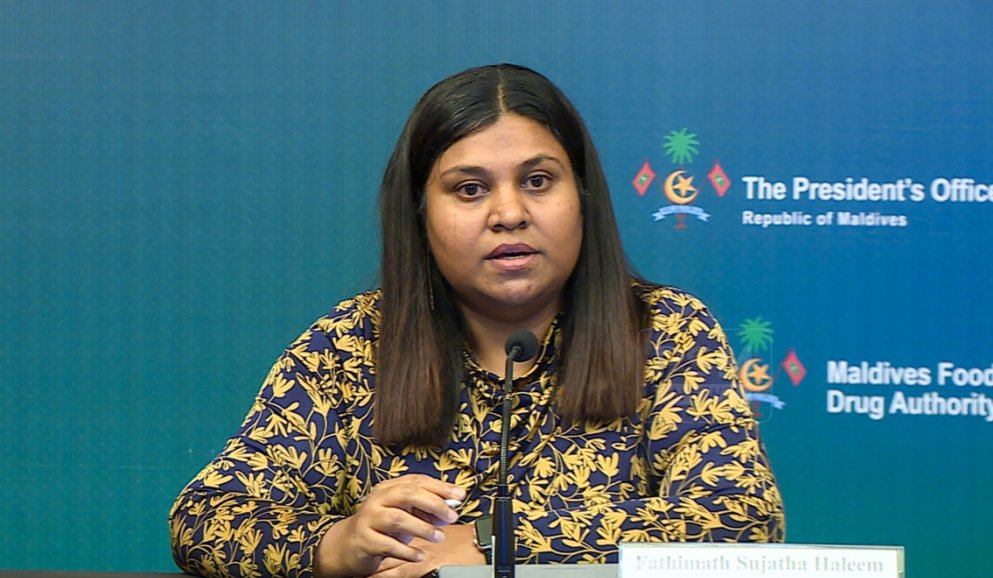
The chief executive officer of the Maldives Pension Administration Office (MPAO), Fathimath Sujatha Haleem, resigned on Wednesday after refusing to sign documents related to a controversial MVR 2.4 billion bond purchase and sale transaction approved by the board, sources said.
Haleem stepped down after declining to authorise paperwork needed to proceed with the transaction, which involves pension funds and the Maldives Monetary Authority. Her resignation follows a series of departures linked to the same deal.
The Maldives Pension Administration Office (MPAO) board approved the transaction on Monday, one day after its chairperson resigned, despite repeated warnings from former finance ministers and opposition figures, according to sources familiar with the decision.
The approval came after a board meeting convened following the appointment of an interim chairperson. The identity of the interim chair has not been disclosed. Details of the meeting, including the quorum, voting records and documentation, have also not been made public.
The decision followed the resignation of former chairperson Ahmed Inaz, who stepped down on Sunday citing concerns over what he described as illegal money creation using pension savings. In a post on X, Inaz said the transaction structure, involving the Maldives Monetary Authority, posed risks to the economy and failed to address deepening fiscal stress.
Inaz said attempts to resolve the issue through discussions did not succeed. He previously served as finance minister under former president Mohamed Nasheed.
Inaz was the third board member to resign over the matter. Board members Ashraf Rasheed and Ahmed Sarvash Adam resigned earlier. The Pension Office’s chief finance officer, Hawa Fajwa, also resigned after refusing to sign documents linked to the transaction.
Former finance minister Ibrahim Ameer said the arrangement did not resemble a standard bond issuance but functioned as a financing transaction designed to route central bank liquidity into government operations through pension funds.
In a statement on Sunday, Ameer said forcing the Pension Office to fund government operations, backed by central bank liquidity, amounted to a serious policy error, especially with sukuk maturities approaching. He said the fiscal crisis was avoidable and accused the Muizzu government of abandoning prudent debt management and delaying financing decisions.
Ameer said the use of pension funds for short-term government financing, alongside limited fiscal transparency, had weakened investor confidence. He contrasted the situation with measures taken in 2021, when refinancing risks were addressed earlier and supported by institutional reforms.
Former Maldivian Democratic Party chairperson Fayyaz Ismail also criticised the decision. Reposting Inaz’s statement on X, Fayyaz said the Muizzu government was moving towards distress borrowing.
Fayyaz said state expenditure continued to exceed revenue growth, while businesses were owed significant sums and households faced rising prices. He said the MVR 2.4 billion transaction, described by critics as indirect money creation, would not reassure international investors and risked pushing future borrowing costs to 14 percent or higher.
Neither the Pension Administration Office nor the government has disclosed details of Monday’s board meeting or issued a public response to the resignations and warnings.