
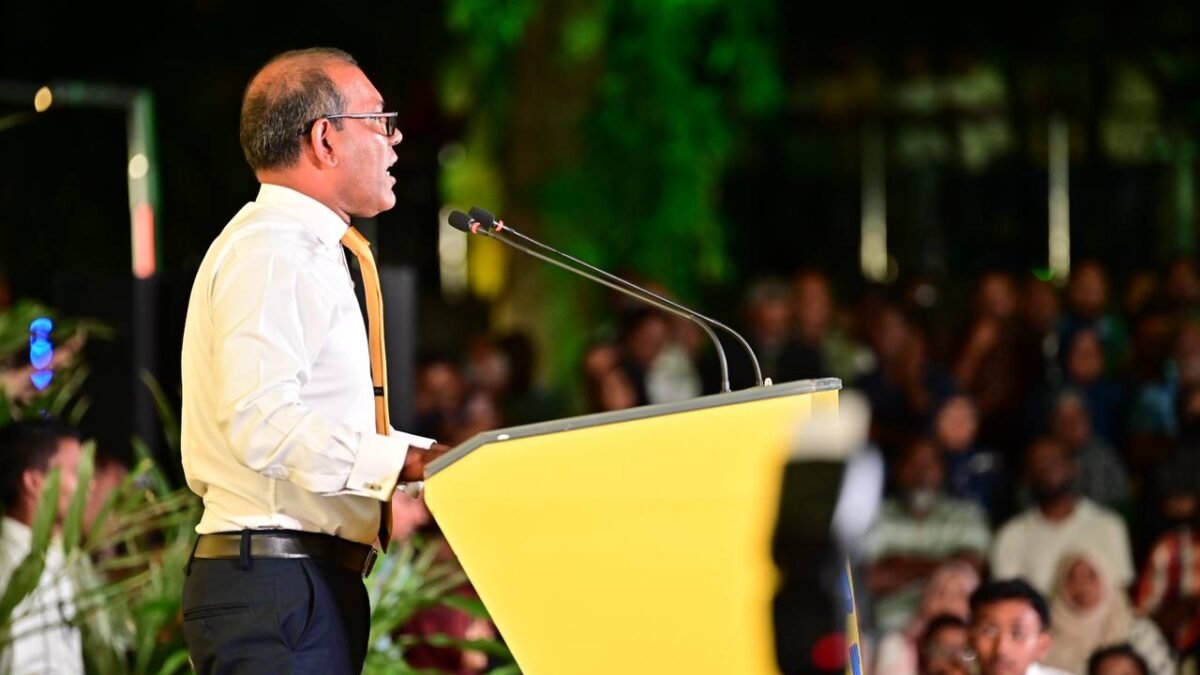
Former president Mohamed Nasheed on Tuesday warned against using pension fund savings for government financing, calling such moves a serious threat to social security and national finances.
In a post on X, Nasheed said pension funds exist for a single purpose: to protect workers in old age through mandatory contributions equal to 14 percent of salaries, split evenly between employees and employers.
“The purpose is to save the money and give it as a pension when you get old,” Nasheed wrote. “It is a big mistake to take the money in the pension fund for anything.”
He said pension contributions should continue every month and that surplus funds should only be invested in profitable ventures, not used to pay government salaries or cover recurrent state expenses.
“Don’t destroy the country’s finances,” Nasheed said. “We are heading blindly towards a pit.”
Nasheed’s remarks came as the Maldives Pension Administration Office (MPAO) faced mounting criticism over a planned MVR 2.4 billion transaction involving treasury bonds.
The pension office on Tuesday defended the deal, which involves selling MVR 2.4 billion worth of existing treasury bonds in the secondary market and reinvesting the proceeds in a new bond issued by the Finance Ministry, including bonds denominated in Maldivian rufiyaa and US dollars.
The office said the transaction would be carried out at no loss, improve long-term returns, convert short-term treasury bills into longer-term bonds, and generate foreign exchange exposure without purchasing foreign currency from the market.
The defence followed the approval of the transaction by the MPAO board on Monday, a day after the resignation of former chairperson Ahmed Inaz. He said the arrangement amounted to illegal money creation using pension savings and would damage the economy.
Two board members and the pension office chief financial officer had resigned earlier over the issue.
Former finance minister Ibrahim Ameer warned the deal was not a standard bond issuance but a financing arrangement designed to inject central bank liquidity into government operations. He said the risks were heightened ahead of the maturity of Islamic Sukuk.
Former Maldivian Democratic Party (MDP) chairperson Fayyaz Ismail also criticised the transaction, saying it would deepen economic distress and further undermine investor confidence.
Neither the pension office nor the government has disclosed details of Monday’s board meeting, including quorum or voting, nor responded to concerns raised by resigning officials.