
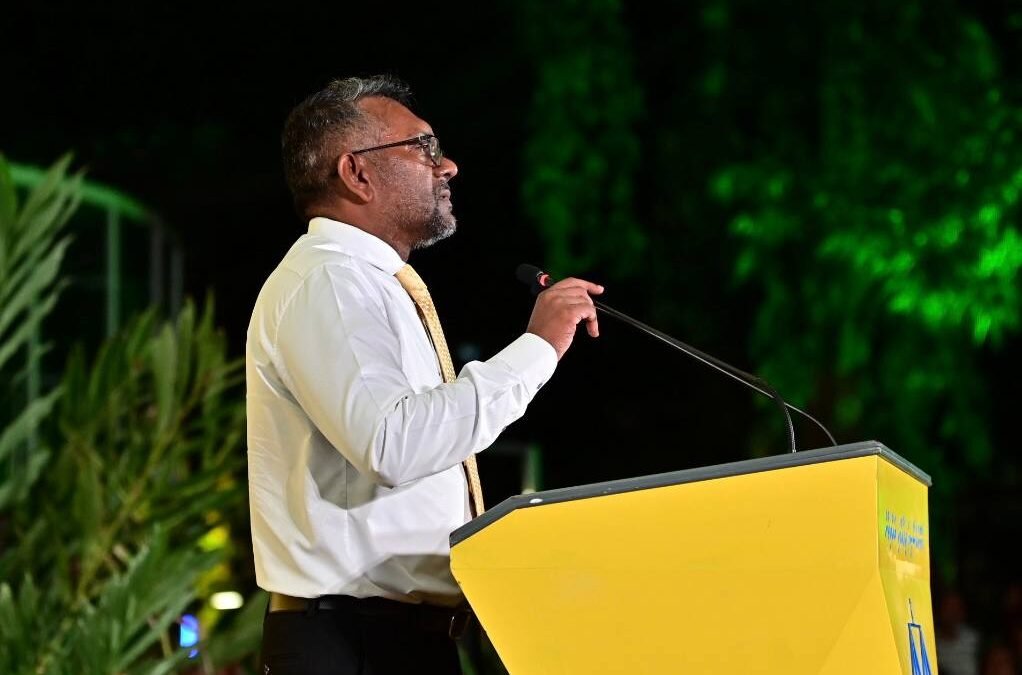
Former Maldivian Democratic Party (MDP) chairperson Fayyaz Ismail has criticised President Mohamed Muizzu’s order to stop and question foreigners at night, likening the move to themes from George Orwell’s novel 1984 and warning of an erosion of fundamental freedoms.
In a post on X, Fayyaz, a lawyer by profession and former economic minister, questioned whether the policy reflected ideological beliefs or “maybe Raees Muizzu has had too much of a read of 1984.” He said the Muizzu government was pursuing what he described as “an unyielding crusade to implement a repressive regimentation of people’s behaviours…designed to dismantle freedoms dear to us.”
“Ultimate objective in the name of peace and stability is the complete suppression of dissent and dismantling people’s power. Today the expat community, tomorrow local population,” Fayyaz warned. He added that many rulers had pursued similar paths, noting: “So many despots unfortunately have had such fantasies of playing dictator. Ultimately, after inflicting significant damage, they fail.”
George Orwell’s 1984, published in 1949, portrays a totalitarian state where authorities maintain power through constant surveillance, control of behaviour and suppression of dissent. The novel has become a global reference point in debates about state overreach, civil liberties and authoritarian governance.
Fayyaz’s remarks follow President Muizzu’s directive ordering police and other authorities to stop and question foreigners found in public places between midnight and 6 am. Muizzu said the measure targets behaviour that disrupts public order and violates social norms.
Authorities have already begun implementing the directive, which applies specifically to foreigners in public spaces during the designated hours.
Critics and legal experts say the policy could conflict with constitutional protections against discrimination. The Constitution states that all individuals are entitled to fundamental rights and freedoms without discrimination, including on the basis of race or national origin. Legal safeguards apply to everyone within the Maldives, regardless of citizenship. Article 17 of the Constitution prohibits discrimination in the exercise of those rights.
Some civil society voices have raised concerns that singling out foreigners for stops and questioning risks breaching these non-discrimination provisions.
Government officials have not released detailed guidelines explaining how the policy will be enforced or how constitutional protections will be upheld. Police have yet to issue a formal statement outlining procedures or safeguards linked to the directive.